
A natural, species-appropriate diet allows your dog to thrive, providing all the essential nutrients needed for a balanced and healthy lifestyle. With no artificial additives or preservatives, raw feeding ensures your pet gets the best and most nutritious food possible.
Many UK Pet owners have made the switch and are already seeing improvements:
By switching to raw, you’re making an incredible choice for your dog’s health, happiness, and longevity!
Use our feeding calculator to estimate the right amount of raw food for your dog. Please note this is a general guide — actual needs may vary based on your dog’s breed, activity level, and the specific proteins in their diet, as some meals contain more calories than others.

Selected Value: None

Entered Weight: None

-
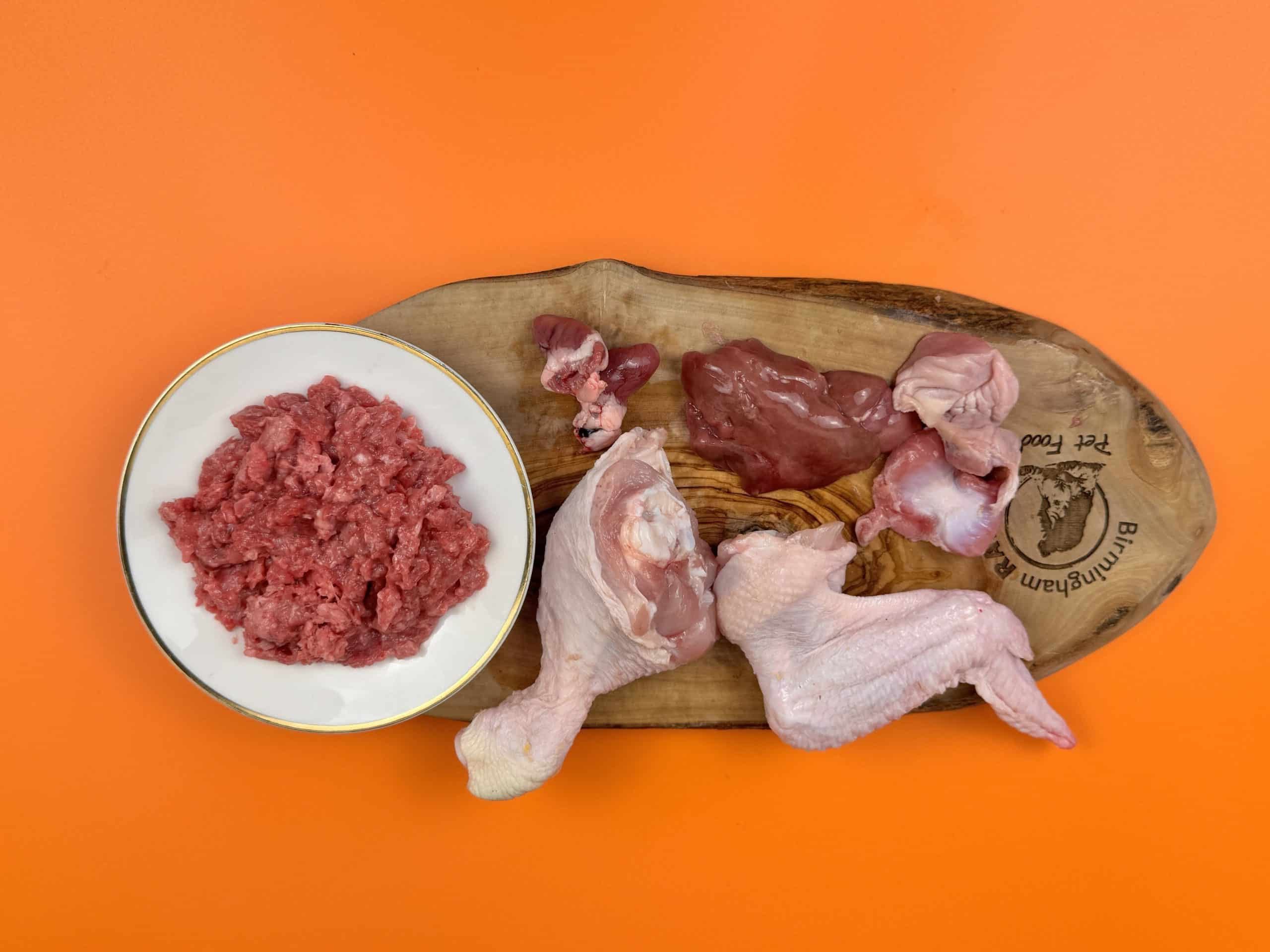
We recommend transitioning to raw food immediately, with no need for gradual introduction. Simply pick a day and make the switch to a completely natural and nutritious raw diet!
That said, if you prefer to introduce raw food gradually—adding it in increasing amounts while reducing the old food over 3-5 days—that’s perfectly fine too. There’s no strict rule; just do what feels right for your dog. The most important thing is that you’ve chosen to make the switch. Whether you do it all at once or over a few days, you’re making a fantastic decision for your pup’s health and happiness!

Once fully transitioned, you’ll start to see the many advantages of a raw diet, including:
 Improved energy levels
  Healthier skin and coat
  Improved joint and mobility
  Cleaner teeth and fresher breath
  Healthy stools
  A happier, more fulfilled dog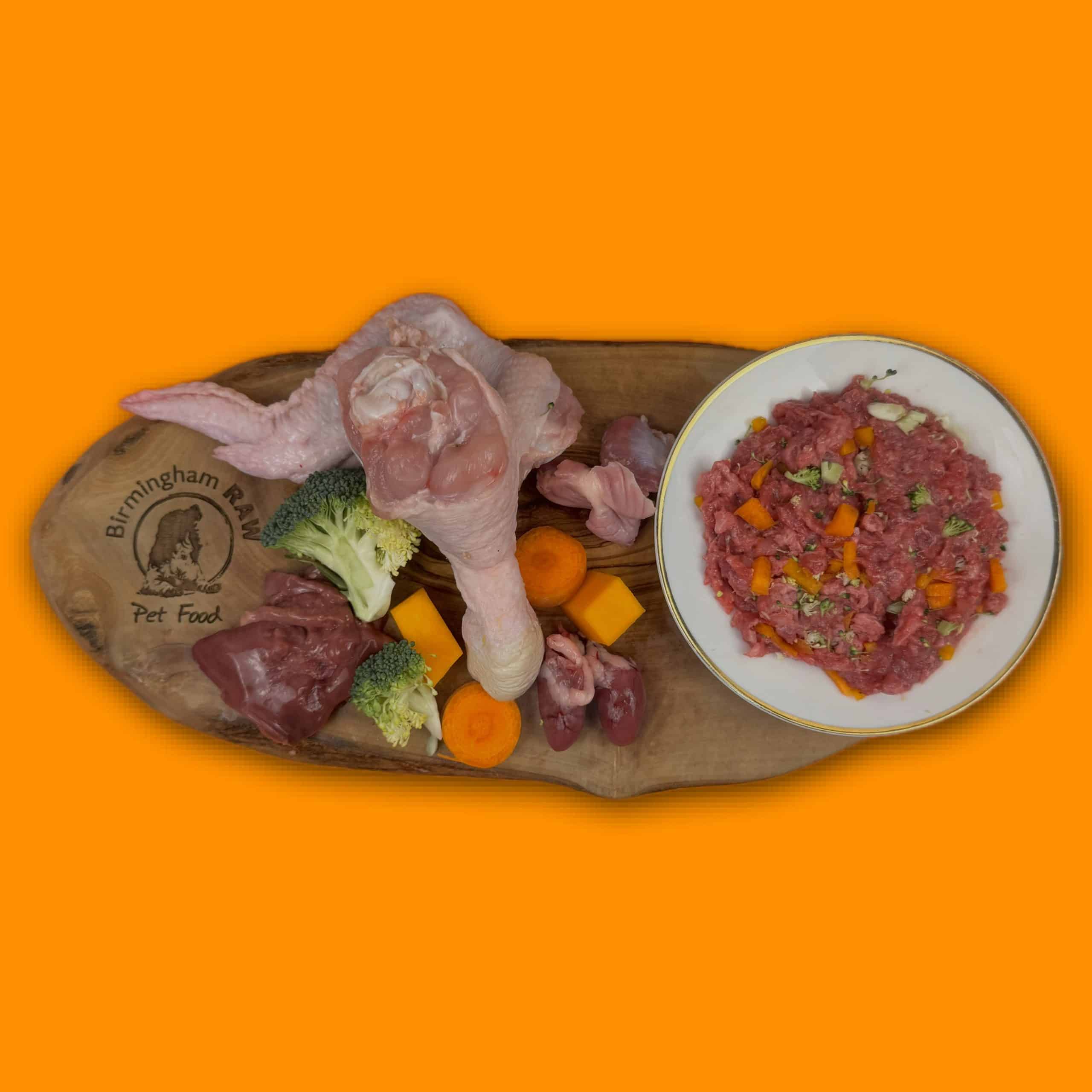
When feeding raw, diversity is key. Different protein sources provide different nutrients, so the more variety, the better! Aim to include at least 2-3 different protein sources over a month period—such as lamb, beef, duck, chicken, salmon, venison or turkey. This is dependent on dog’s allergies or needs.
To ensure a well-balanced diet, we recommend rotating through different 80-10-10 or 70-10-10-10 complete meals from our range.
We now have a range of 70/10/10/10 meals which are complete with muscle protein, offal, bone and vegetables!
Some dog owners choose to include fruits and vegetables in their pup’s raw diet. Since dogs lack the enzymes to break down raw vegetables effectively, they pass through mostly undigested. That’s why blitzing, pulping, or grinding them is recommended for better absorption. Raw fruits and veggies like carrots or bananas make great natural treats. Blueberries are an excellent choice for training—not only are they delicious, but they’re also packed with antioxidants!
By following these guidelines, you’re ensuring your dog gets a balanced, nutritious diet that supports their overall health and well-being.
Never run out of your pet’s favourites again. Subscribe today and stay in the loop!